
Plot:
The Doctor and Amy, after receiving a ridiculous and over-complicated message from River Song, save the archaeologist as she escapes from a doomed spacecraft, the Byzantium. The ship crashes on the planet Alfava Metraxis and a Weeping Angel escapes into catacombs of that planet - the so called maze of the dead. A group of religious soldiers arrive lead by Father Octavian, who River Song is working with on day release from the Stormcage prison in order to earn herself a pardon for killing a good man (Who could that possibly be?). They all venture into the maze to track down the angel, but realise the statues all around them are not in fact statues at all, but hundreds and hundreds of nearly dead angels. The radiation from the crashed ship is bringing them to life, the crash having been engineered to bring this about. The party start to get picked off, one by one. Finally surrounded, they are saved by the Doctor, who does something very clever with some gravity-related equipment, allowing them to float back up to the crashed ship, and climb inside. Here is a greater source of energy that the angels are seeking to feed off, and the Doctor soon discovers what it is - a crack, like the one in Amy's bedroom wall when he first met her, a crack in space-time itself, bleeding out energy. The Doctor examines the crack and discovers it was created on the 26th June 2010 - Amy's time. To escape the ever stronger angels, they escape into an onboard forest (used as an oxygen factory).
 After an earlier altercation with some video footage of an angel ("That which holds the image of an angel becomes itself an angel") Amy is being taken over by an angel inside her mind. To stop it, she must close her eyes completely. The Doctor, River and Octavian leave her stuck in the forest with the remaining cleric soldiers as guards, and make for the spaceship's control room. The encroaching angels suddenly run off, scared of the glowing crack which has appeared in the forest. One by one, each of the soldier guards go to investigate the crack, and disappear, with those remaining, except Amy, unaware that their colleagues had ever existed. The crack is devouring things, and wiping them out of existence. Octavian gets caught by an angel, but just before he dies tells the Doctor not to trust River. With all the soldiers gone, and the wave of time energy from the crack advancing, Amy has to escape through a group of angels with her eyes closed; luckily, River manages to fix the teleport and bring her to the control room. The angels advance on them, but the Doctor does something else very clever with gravity-related equipment, and the angels all fall into the crack. the ingestion of such a complicated space-time event as the angels causes the crack to close. The Doctor says goodbye to River, who tells him they'll meet again when the Pandorica opens. Back at Amy's home, she reveals that she's been running away from her wedding the next day; the Doctor realises that Amy's wedding day is the 26th June 2010.
Context:
 After an earlier altercation with some video footage of an angel ("That which holds the image of an angel becomes itself an angel") Amy is being taken over by an angel inside her mind. To stop it, she must close her eyes completely. The Doctor, River and Octavian leave her stuck in the forest with the remaining cleric soldiers as guards, and make for the spaceship's control room. The encroaching angels suddenly run off, scared of the glowing crack which has appeared in the forest. One by one, each of the soldier guards go to investigate the crack, and disappear, with those remaining, except Amy, unaware that their colleagues had ever existed. The crack is devouring things, and wiping them out of existence. Octavian gets caught by an angel, but just before he dies tells the Doctor not to trust River. With all the soldiers gone, and the wave of time energy from the crack advancing, Amy has to escape through a group of angels with her eyes closed; luckily, River manages to fix the teleport and bring her to the control room. The angels advance on them, but the Doctor does something else very clever with gravity-related equipment, and the angels all fall into the crack. the ingestion of such a complicated space-time event as the angels causes the crack to close. The Doctor says goodbye to River, who tells him they'll meet again when the Pandorica opens. Back at Amy's home, she reveals that she's been running away from her wedding the next day; the Doctor realises that Amy's wedding day is the 26th June 2010.
Context:
Watched the episodes from the Blu-ray, one episode per week as it was originally broadcast. For the first episode, I was joined by all the kids (boys of 13 and 10, girl of 7), who all liked it enough to come back a week later. This time they were also joined by the Better Half (woman, perpetually 21). The youngest was very excited that it was a Matt Smith episode, as she thinks of him as her Doctor, despite the fact that he bowed out before she was even old enough to watch the show. It's great that she's formed an attachment, just a shame that it couldn't be for the first female Doctor (who up until recently she would shy away from, but that situation is improving - she's watched all the episodes of the latest series live so far). She was also very impressed by River Song, saying "I like her" often during flashy shenanigans in the first episode.
First time round:
First time round:

Reaction:
2010's new lead writer and exec Steven Moffat appears to play things safe with his first set of episodes. Taking over from Russell T. Davies at the height of popularity, he reuses the basic structure that Davies set up for his seasons. There are three relatively lightweight stories to kick off, one contemporary invasion story, one set in the future, one in the past. There's a running reference in every episode that allows the audience to play a 'Where's Wally / Waldo?' type game. Davies smuggled in references to Bad Wolf, Torchwood or Harold Saxon, Moffat has the mysterious crack following our heroes around the universe, which cameoed in each of those first three episodes. Then - again following the Davies pattern - there's this big two-parter with a returning monster. As Davies did it, there would then be further single part stories and another 2-parter, before everything was rounded off in a two-part finale, but nothing more than the odd mention of the series' mysterious theme would appear in any of them. This is where Moffat breaks away from tradition and wrongfoots the long-term audience. They would undoubtedly have been expecting many more stand-alone stories, with a crack appearing now and then just out of view of the Doctor and Amy, right up until the end of the season, when suddenly the mystery would be revealed. But, not long into the second episode of this 2-parter, the crack is suddenly there, front and centre of the story - it's almost as if the finale has come in episodes 4 and 5, making it very exciting to see what can possibly happen next.
 The trouble with the overarching plot becoming the focus rather than telling stand-alone stories is that each individual story is less satisfying on its own merits. Moffat loves intricate plotting - and to be fair to him, a lot of the audience does seem to respond to his puzzle-box narratives - but the law of diminishing returns is inevitably going to come into play. In The Time of Angels / Flesh and Stone, we don't really find out anything about the mysteries of River Song or what caused these cracks in time, we just get a tiny bit more information. The overall story suffers a bit by having to cram in this stuff - the angels are relegated to a secondary threat in the Flesh and Stone episode, as they run away from the big bad crack. What you're left with ultimately is set pieces and exposition. But such set pieces and such exposition! There's something wonderful, something that never gets old, about scenes of Weeping Angels advancing in stuttering freeze frames as the lights blink on and off. There are also a couple of sequences that are the best of any in this period of the show, and perhaps of all time: Amy watching a repeating video clip of an angel gradually change, and emerge from the screen to become corporeal; plus, the long tense walk, where Amy has her eyes closed and has to stumble through a group of angels, pretending that she can see (which culminates in the magic, creepy moment where we see an angel moving in real time).
 On the exposition side, there is some clever and fun use of the crack to clean up past continuity problems and justify rebooting things: the Cyber-King from The Next Doctor can tower all over Victorian London and stomp on buildings but not be recorded in any history books because a crack ate it. The crack has eaten the Daleks that stole the Earth, which means Amy doesn't have to remember that, and be laden down with all that baggage. Does this hang together, though? The crack in Amy's bedroom wasn't spilling out dangerous time energy like the one here: Amy slept next to it for years, and Prisoner Zero was able to walk through from the other side, and neither of them got wiped from existence. Why the difference? It also is hinted that Amy's crack has eaten the ducks from the Leadworth duck pond, and in later stories it is confirmed that it's wiped out Amy's Mum and Dad. Why is that crack able to discriminate and erase things that are not in physical proximity, when the one on board the Byzantium behaves so differently? Fixing one continuity issue has simply created another inconsistency. It seems churlish, though, to criticise a minor issue with Moffat's plotting, when he's putting such serious hard work into making his season (seasons!) fully integrated. Flesh and Stone, for example, contains a scene with the Doctor talking to Amy in the forest that's not really from this episode at all - it's the Doctor from the future, dropping into his own past story. Eagle-eyed viewers will have spotted that he is wearing a jacket, after just having lost his in the Weeping Angels narrative.
 More intricate plotting, and seeding of ideas that will pay off later, is seen in the character of River Song. Did Moffat plan to make her a recurring character when he included her in Silence in the Library? Did he even know he was going to be taking over as lead writer at that point? i can't remember the order of events. Whether it was planned or just capitalised on later, it is magnificently seamless. In that first appearance, River asks the Doctor whether they have had "the crash of the Byzantium" yet, and now we get to see it in all it's glory. Here we find out that River can pilot the TARDIS after having "lessons from the very best", and that will then pay off in a year or so. The whole River arc hangs together very well for something written and produced piecemeal over 7 years or so. More than just a big bag of continuity references, though, River is an amazing presence: kick-ass, twinkly, sly, and deploying hallucinogenic lipstick to good effect (the lipstick is introduced for the first time here, with a trippy scene featuring Mike Skinner in a cameo as a guard). Matt Smith more than matches Alex Kingston, getting some great dialogue and grandstanding moments to show off his new Doctor chops (this was the first story filmed, and he is confident and sure-footed from the off). Iain Glen as Father Octavian gives a solid performance too - his pre-death scene, where he is caught by an angel, and as soon as the Doctor looks away he'll have had it, is particularly good: "I wish I'd known you better", "I think, sir, you know me at my best."
 It's all good, it's just a bit thin. There's an attempt at having a dramatic dilemma - should the Doctor sacrifice himself to close the crack, or should the angels? But the answer to that question is fairly obvious if one thinks about it for a second. Once the angels are dispatched all is well, and if the story ended there it would be fine. The story would no doubt be overrated by a lot of fanboys, but it would be very enjoyable for all nonetheless. But the final moments are a very awkward misstep. There's no delicate way to say it: Amy tries to jump the Doctor. It's not necessarily misjudged per se - anyone who's seen Fleabag knows a female character can be believably vulnerable and sexually assertive at the same time, but it has to be written and performed by someone as talented as Phoebe Wally-Whatsit; this was written by a middle-aged man,and performed by Karen Gillan, who is not up to the job of salvaging an un-actable scenario. She has a very good quality of being beautiful but sexually non-threatening, which has served her well in Hollywood, but makes her performance in this scene seem false. Matt Smith, meanwhile, although young and handsome enough, plays the Doctor as a child trapped in an old man trapped in a younger man. It's not a sexually charismatic performance at all, and so also does not work in that moment. Result: cringe.
Connectivity:
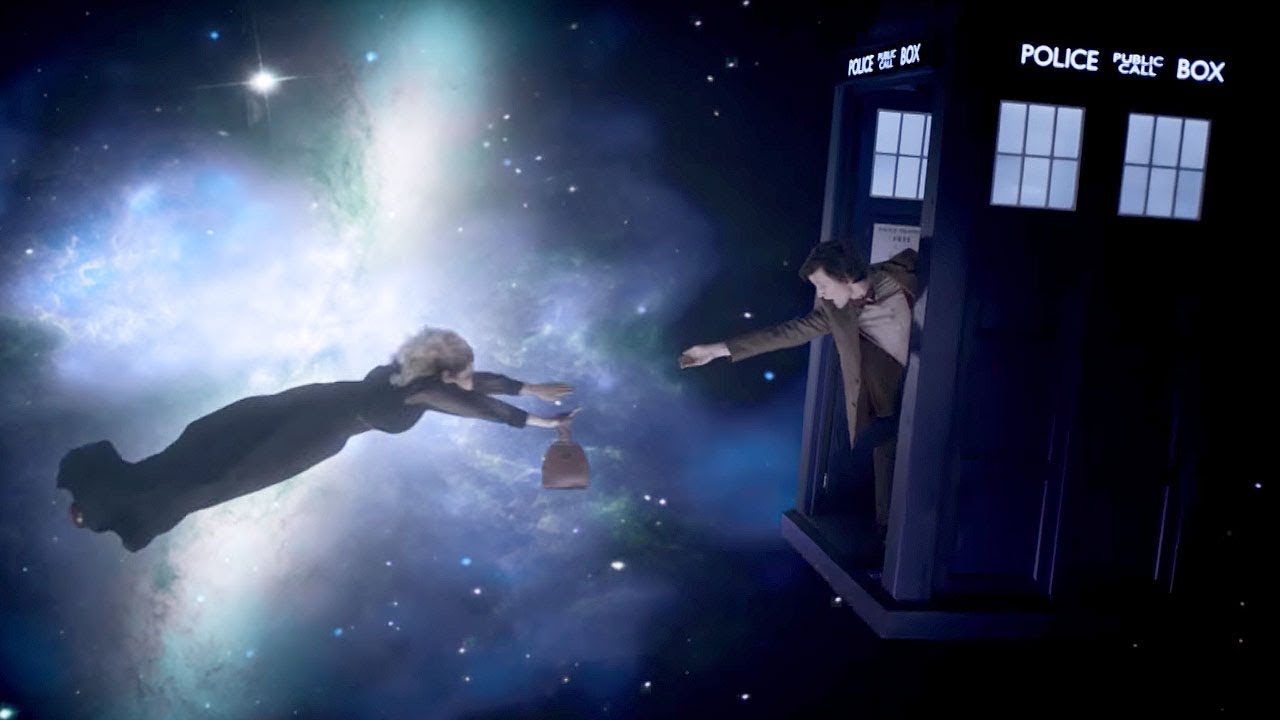 The trouble with the overarching plot becoming the focus rather than telling stand-alone stories is that each individual story is less satisfying on its own merits. Moffat loves intricate plotting - and to be fair to him, a lot of the audience does seem to respond to his puzzle-box narratives - but the law of diminishing returns is inevitably going to come into play. In The Time of Angels / Flesh and Stone, we don't really find out anything about the mysteries of River Song or what caused these cracks in time, we just get a tiny bit more information. The overall story suffers a bit by having to cram in this stuff - the angels are relegated to a secondary threat in the Flesh and Stone episode, as they run away from the big bad crack. What you're left with ultimately is set pieces and exposition. But such set pieces and such exposition! There's something wonderful, something that never gets old, about scenes of Weeping Angels advancing in stuttering freeze frames as the lights blink on and off. There are also a couple of sequences that are the best of any in this period of the show, and perhaps of all time: Amy watching a repeating video clip of an angel gradually change, and emerge from the screen to become corporeal; plus, the long tense walk, where Amy has her eyes closed and has to stumble through a group of angels, pretending that she can see (which culminates in the magic, creepy moment where we see an angel moving in real time).
 On the exposition side, there is some clever and fun use of the crack to clean up past continuity problems and justify rebooting things: the Cyber-King from The Next Doctor can tower all over Victorian London and stomp on buildings but not be recorded in any history books because a crack ate it. The crack has eaten the Daleks that stole the Earth, which means Amy doesn't have to remember that, and be laden down with all that baggage. Does this hang together, though? The crack in Amy's bedroom wasn't spilling out dangerous time energy like the one here: Amy slept next to it for years, and Prisoner Zero was able to walk through from the other side, and neither of them got wiped from existence. Why the difference? It also is hinted that Amy's crack has eaten the ducks from the Leadworth duck pond, and in later stories it is confirmed that it's wiped out Amy's Mum and Dad. Why is that crack able to discriminate and erase things that are not in physical proximity, when the one on board the Byzantium behaves so differently? Fixing one continuity issue has simply created another inconsistency. It seems churlish, though, to criticise a minor issue with Moffat's plotting, when he's putting such serious hard work into making his season (seasons!) fully integrated. Flesh and Stone, for example, contains a scene with the Doctor talking to Amy in the forest that's not really from this episode at all - it's the Doctor from the future, dropping into his own past story. Eagle-eyed viewers will have spotted that he is wearing a jacket, after just having lost his in the Weeping Angels narrative.
 More intricate plotting, and seeding of ideas that will pay off later, is seen in the character of River Song. Did Moffat plan to make her a recurring character when he included her in Silence in the Library? Did he even know he was going to be taking over as lead writer at that point? i can't remember the order of events. Whether it was planned or just capitalised on later, it is magnificently seamless. In that first appearance, River asks the Doctor whether they have had "the crash of the Byzantium" yet, and now we get to see it in all it's glory. Here we find out that River can pilot the TARDIS after having "lessons from the very best", and that will then pay off in a year or so. The whole River arc hangs together very well for something written and produced piecemeal over 7 years or so. More than just a big bag of continuity references, though, River is an amazing presence: kick-ass, twinkly, sly, and deploying hallucinogenic lipstick to good effect (the lipstick is introduced for the first time here, with a trippy scene featuring Mike Skinner in a cameo as a guard). Matt Smith more than matches Alex Kingston, getting some great dialogue and grandstanding moments to show off his new Doctor chops (this was the first story filmed, and he is confident and sure-footed from the off). Iain Glen as Father Octavian gives a solid performance too - his pre-death scene, where he is caught by an angel, and as soon as the Doctor looks away he'll have had it, is particularly good: "I wish I'd known you better", "I think, sir, you know me at my best."It's all good, it's just a bit thin. There's an attempt at having a dramatic dilemma - should the Doctor sacrifice himself to close the crack, or should the angels? But the answer to that question is fairly obvious if one thinks about it for a second. Once the angels are dispatched all is well, and if the story ended there it would be fine. The story would no doubt be overrated by a lot of fanboys, but it would be very enjoyable for all nonetheless. But the final moments are a very awkward misstep. There's no delicate way to say it: Amy tries to jump the Doctor. It's not necessarily misjudged per se - anyone who's seen Fleabag knows a female character can be believably vulnerable and sexually assertive at the same time, but it has to be written and performed by someone as talented as Phoebe Wally-Whatsit; this was written by a middle-aged man,and performed by Karen Gillan, who is not up to the job of salvaging an un-actable scenario. She has a very good quality of being beautiful but sexually non-threatening, which has served her well in Hollywood, but makes her performance in this scene seem false. Matt Smith, meanwhile, although young and handsome enough, plays the Doctor as a child trapped in an old man trapped in a younger man. It's not a sexually charismatic performance at all, and so also does not work in that moment. Result: cringe.
Connectivity:
Both Spyfall and The Time of Angels / Flesh and Stone are big two-part stories with the return of an old adversary, and both have major revelations linked into ongoing plot arcs (or at least I assume that's the case for Spyfall, they might never mention the Timeless Child again for all I know, but I doubt it).
Deeper Thoughts:

 Almost always, more than one actor is in contention for the role of the Doctor - I have it in my head that Colin Baker is the only exception in the Classic series era. Hartnell was something like fourth choice for the role originally. There are parallel universes out there where Geoffrey Bayldon, Michael Bentine, Dermot Crowley and Chiwetel Ejiofor (to name but a few) are enjoying weekly Saturday teatime TARDIS adventures. Now, if you're not up to date with the current series of Doctor Who, stop reading now, but talk of parallel universes where someone else is playing the Doctor leads me inevitably to the most recent (at the time of writing) episode of Doctor Who, Fugitive of the Judoon. They played a blinder, didn't they? Clever misdirection, a returning alien, a lovely cameo from a significant character (who I can't believe isn't coming back very soon) and a new incarnation of our hero. Lovely. It's good that the show still can surprise us, and can dip into these (potentially - Chibnall's not giving anything away) counterfactual narratives from time to time in the main show. And I assume Big Finish will one day make a long-running audio series of the 'Ruth' Doctor, and every other one of those I listed above - I'm sure they can get someone who can impersonate Michael Bentine...
In Summary:
This blog post is - presumably, and hopefully - the last time I'll have to type out the word 'crack' quite so many times (unless I get some sort of admin job for a chain of waxing salons, perhaps).


